6 More Ways to Notice Like a Child

“To the attentive eye, each moment of the year has its own beauty.”

– Ralph Waldo Emerson –

I spent last week at a writers’ conference in Princeton and realized again just how much a change of location draws our attention to our surroundings. Of course even in unfamiliar places, we can stay stuck in our own thoughts (or focus on our smart phones). But to a child, a new place is an adventure. And that’s what I had last week – new paths, different gardens, benches on the green where I could sit and simply notice the world around me. Adventure.

In my last post, I suggested six ways to notice the world like a child: Sit in a swing, angle yourself, squint, focus on moving water, squat, and get bored. Here are six more ways we can enter into that space of childlike wonder.

IMG_2109

  1. Use as many senses as you can. When adults notice, it’s usually with the visual sense. Listening is a close second. Children notice with as many senses as adults will allow them to use. Touch is right up there with looking and listening. So is smell and taste.

2. Look up. I love trees, especially treetops. I love how the top branches reach toward the sky and dance in the wind. But when I get busy, I plow through my day at eye level. So notice the tops of tree. Gaze at the stars. Watch a jet make a vapor trail. Look up and discover.

3. Imagine. Children specialize in imagination, which is an extended way to notice the world. Imagining takes noticing to the next level. Remember when you were a child and looked up at clouds? Maybe you not only noticed them but also imagined that the cloud shapes were elephants or ships or whatever delighted you. My daughter-in-law and I often walk at our local botanical gardens. One of our favorite trails passes among trees where roots vein out across a ground carpeted with moss. We almost expect to see fairies come dancing through.

4. Experiment. Make something happen. Toss a pebble into a pool, listen to the splash, and watch the ripples. Blow a dandelion. Blow bubbles with a straw in a glass of milk. Stir the milk and watch the vortex.

5. Follow through. Sometimes we notice but turn away too soon to absorb the wonder of the moment. Blow bubbles, watch colors wink on their surface, and then follow through by continuing to watch as the bubbles float away. (Seriously, how long has it been since you’ve blown bubbles?)

6. Linger. This is like following through, but I think of it in the context of an unexpected moment that strikes us with a sense of wonder in passing. I grew up in West Texas, where the sunsets can be spectacular. I now live in Nashville, Tennessee, where trees block the view. But a few months ago, an amazing sunset turned billowing clouds overhead every shade of brilliant pink and orange. Along some of the busiest streets, people stepped out of shops and pedestrians paused on the sidewalks, and for a few moments, it seemed like the whole city looked up and lingered in awe.

So use as many senses as you can, look up, imagine, experiment, follow through, and linger. And use those moments to nourish peace and cultivate loving kindness. Then carry the calm.

Nature of the week – flowers in Princeton:

P'tonFlowers

Shadow of the Week – lamp shadow in Princeton:

P'tonLmpShdw


Text and photos © 2016 Karyn Henley. All rights reserved.

What’s Waiting to Be Seen

6 Ways to Notice Like a Child

“To see a World in a Grain of Sand

And a Heaven in a Wild Flower,

Hold Infinity in the palm of your hand

And Eternity in an hour.”

William Blake, Auguries of Innocence


Do you have some time off this summer – maybe a week or two of vacation? Can you carve out a bit of down time for yourself? It’s a good habit to get into, allowing ourselves down time. Time to simply be. Even five minutes does wonders if we can let ourselves relax into it, especially if we spend the time in free-form noticing, being in the moment, being aware – like a child.

When I was a child, I spent a lot of time simply being. Free time was free, and there was lots of it. The only screen we had was the television, there were only three channels, and it was turned on only at select times. So I read, or I found something artsy-craftsy to do, or I simply sat and noticed and pondered. Even now, when I think of tapping in to a sense of wonder and deep calm, I go back to that state of being that taught me how to notice.

Children are experts at seeing and sensing wonder in common objects that adults often rush past. Here are six ways to train yourself to notice like a child and set your sense of wonder free again.

  1. Sit in a swing and rock slowly back and forth. Notice your surroundings as you let the motion lull you. As a child, swinging lazily in my backyard, I would scan the grass, watch the busy ants beneath me, and imagine what the world might look like from an ant’s perspective. Try it.
  1. Angle yourself. Children twist and turn and lean and look from all kinds of angles that upright adults rarely use to view the world. I used to turn upside down in a chair or couch and study the new perspective of the room, pretending that I lived in an upside down house. I imagined that I walked on the ceiling and had to step over the top of the door (now the bottom). (Confession: I still do this sometimes.)
  1. Squint. Some artists squint in order to see large areas of shadow and light and color in the subject they’re preparing to paint. Spend a few minutes squinting or looking out of the corner of your eye to get a different perspective on the world. It’s especially fun to squint at lights and make them split into a starburst (you did this as a kid, right?). My grandmother had wallpaper in a pattern so busy that when I squinted at it, it would wiggle and swim.
  1. Focus on moving water. Watch rain form a puddle or make ripples in a pond or pool. Watch water fill a bathtub. When my parents watered the lawn, there was always a trickle of water running down the driveway to the street. I used to follow the leading edge of the water and watch it roll slowly forward to merge at last into the stream in the gutter. I thought of it as a bird’s-eye view of Moses leading the Israelites to the Red Sea. Go figure.
  1. Squat. Okay, it’s harder for some of us to squat these days, so maybe just sit somewhere low where you can watch an insect. Some will be too fast for you, but others – ants, beetles, praying mantis, bees in a garden – are pretty easy to spy on. From this angle, you can also sift through pebbles. Enjoy.
  1. Get bored. I can picture this point scheduled into a daytimer: Get bored. Of course, maybe you don’t have time to stop and simply let yourself get bored. But remember this one the next time you’re a captive audience. Instead of growing anxious over your to-do list, sit there and . . . yep, get bored. See what you can see, smell what you can smell, listen to background sounds, feel the textures around you. When I was growing up and my mind wandered in church, I studied the patterns in the wood paneling on the walls and pulpit. Some patterns looked like objects or city buildings or animals. I especially enjoyed finding faces in the patterns.

Were you fortunate enough to have free time as a child? Were you allowed to get bored? Did you experience simply being? What did you notice during that time? Next week, I’ll post six more ways to notice like a child. Meanwhile, nourish peace, cultivate loving kindness, and carry the calm.

Nature of the week – from my Wednesday Walk at Cheekwood Botanical Gardens:

Ckwd6.1.16

Shadow of the Week – from my deck:

dkshdw5.21


Text and photos © 2016 Karyn Henley. All rights reserved.

What’s Waiting to Be Seen


What’s Waiting to Be Seen

“[S]ee what is all around you just waiting to be seen.”

P.T. Barnum


I’ve been learning to paint with watercolor, and I’m especially intrigued by the paintings of Yuko Nagayama. Her first point of “Watercolor Wisdom” is “Don’t just look at something. Observe it! Observe and get a feel for it.” Observing may involve touching, squinting your eyes to more easily see light and shadow, and appreciating shapes.

So this week, observe what’s around you waiting to be seen.

And nourish peace, cultivate loving kindness, and carry the calm.

Nature of the week – Observed these flowers, had to paint them:

A&S5.24.16

Shadow of the Week – scissors and spiral on my desk. (I’ve been writing a lot.):

spiralShdw


Text and photos © 2016 Karyn Henley. All rights reserved.

With Quiet Eyes

I will be the gladdest thing

Under the sun!

I will touch a hundred flowers

And not pick one.

I will look at cliffs and clouds

With quiet eyes,

Watch the wind bow down the grass,

And the grass rise. . . .

– Edna St. Vincent Millay, “Afternoon on a Hill” –


Pause sometime this week to look at nature with quiet eyes. Watch the play of the wind and the shift of the shadows. Let the shape, color, and scent of a flower imprint on heart and mind. Hold it. And carry this calm.

Nature photo of the week – bellflower:

campanula1

Shadow of the Week – leaf on leaf:

LfonLfShdw


Text and photos © 2016 Karyn Henley. All rights reserved.

Now Trending . . . or Now Tending?

“Where you tend a rose, my lad,

A thistle cannot grow.”

– Frances Hodgson Burnett, The Secret Garden –


Tend is short for attend. Meaning pay attention.

Peace is found more often by paying attention not to what’s trending but to what needs tending. Sure, sometimes they’re the same. But be aware. Pay attention. Nourish peace, cultivate loving kindness, carry the calm. And tend the roses.

Nature photo of the week – tiny beauty blown off a pine tree:

smPineCone

Shadow of the Week – from flowers on my deck:

DkShd5.8.16


Text and photos © 2016 Karyn Henley. All rights reserved.

WOW = Windows Open Wide

“All the windows of my heart I open to the day.”

John Greenleaf Whittier

I love windows, all shapes and sizes. I love open windows when the day is mild and breezes drift in. I love sleeping by open windows, especially when insects serenade the darkness and distant trains call out on their journey through the night. I love to wake up to a view of dawn out the window, whether I find its light trickling down winter-bare branches or turning green leaves into morning gold.

myb'rmwindow

Then there are windows not-so-literal windows, open to our minds, our hearts, our souls: sight, smell, hearing, taste, touch – our senses. Yesterday, my family opened a window by listening to an episode of Fresh Air that explored the sounds birds make. It was amazing to hear these birds (one, a lyre bird mimicked the sound of a chain saw perfectly!). All we could say afterward was WOW.

Windows Open Wide. Windows Open to Wonder.

Open wide to wonder this week. Where do you find it?

Nourish peace, cultivate loving kindness, and carry the calm.

(And if you’re a mom, Happy Mother’s Day!)

Nature photo of the week – from my Wednesday Walk at Cheekwood Botanical Gardens:

YlIrisWtrfl

Shadow of the Week – morning coffee:

CupShdw


Text and photos © 2016 Karyn Henley. All rights reserved.

A Soul Ajar

“The soul should always

stand ajar, ready to

welcome the ecstatic

experience.”

– Emily Dickinson –


Leave your soul ajar this week. Watch. Listen. Hold on to what enriches you.

Nourish peace,

cultivate loving kindness,

and carry the calm.


Nature photo of the week– a tiny star-shaped bud, smaller than my pinkie nail, tracked indoors onto the carpet:

star:carpet

Shadow of the Week – made by the acanthus design of a window at the Frist Center of the Visual Arts:

ShdwFrist

Text and photos © 2016 Karyn Henley. All rights reserved.

Chekhov’s 4 Qualities of Great Art

“In any true, great piece of art you will always find four qualities which the artist has put into his creation,” said actor and director Michael Chekhov. He calls those qualities the “Four Brothers”: a feeling of Ease, a feeling of Form, a feeling of Beauty, and a feeling of the Whole.

I just spent the afternoon at the Frist Center for the Visual Arts, which is itself a work of art, built in the early 1930’s inFrist1 classicism and Art Deco styles. Ease, Form, Beauty, Wholeness, the building fits Chekhov’s definition perfectly. The main gallery is currently exhibiting a collection from a noble family in Spain, the House of Alba, which includes paintings by artists like Titian, Goya, Velasquez, and Rubens. Many of the paintings are portraits from as early as the 15th century, and it’s interesting not only to see how the people dressed and wore their hair but also to notice what else they wanted in the painting. As one description of the exhibit points out, “[A] portrait declares his or her intellectual interests, social standing, and values. Crowns, gowns, hairstyles jewelry, military insignia, musical instruments and pets all give us insight into . . . how he or she wanted to be remembered.”

Because, really, it’s the person, not the painting who is the greater work of art. We who are roaming the galleries are the masterpieces. In fact, in one version of ancient scriptures, St. Paul says, “We are God’s masterpiece” or poiéma in ancient Greek, which technically means creation or workmanship but became the word for, yes, poetry or poem.

It just so happens that April is National Poetry Month – a perfect time to think of ourselves as living, breathing poems, as works of art. I suspect that’s why Chekhov’s “Four Brothers,” those feelings of great art, call to the deepest places in us. Great art resonates with the desire of our souls for ease, form, beauty, and wholeness.

Great art calls to the art that is you. You are the art, the poem, the masterpiece. As you meditate this week, breathe into that place of ease, feel and accept yourself in your own unique form and beauty, and open your spirit to the wholeness that is around you and within you.

Nourish peace, cultivate loving kindness, and carry the calm.

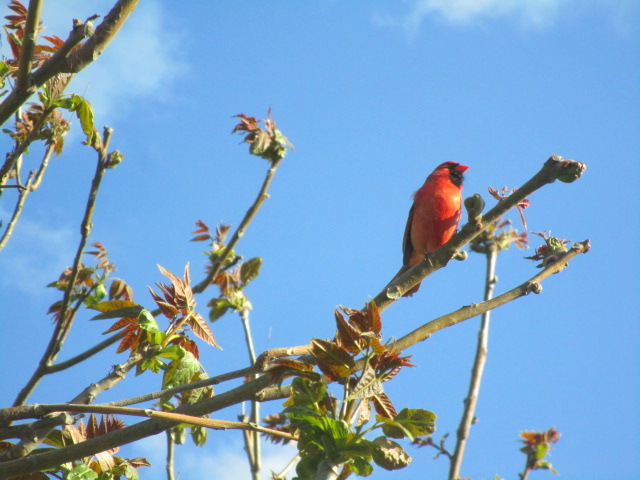
Nature photo of the week:

cardnl1

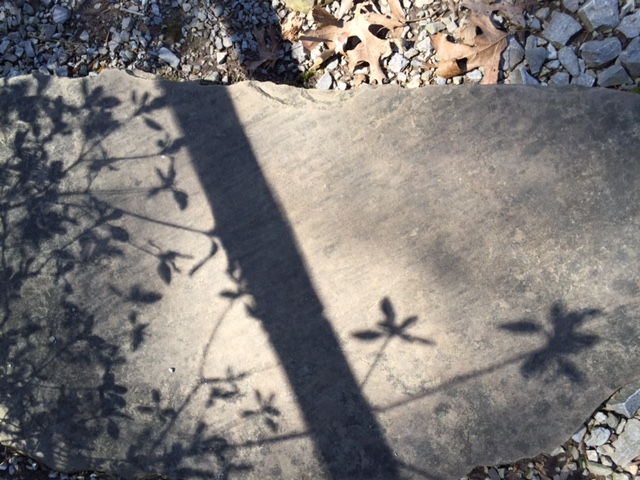
Shadow of the Week:

CkwdShdw3

Text and photos © 2016 Karyn Henley. All rights reserved.


Far Away in the Sunshine